Xsens Alternative Under 150 Pounds Wearable Imu Uk
Direct answer: a sub-£150 wearable IMU can be a sensible Xsens alternative for a UK pilot study when the job is feasibility, workflow testing or rough kinematic screening. It is not a like-for-like replacement for a validated commercial motion-capture system.
Where the low-cost route helps
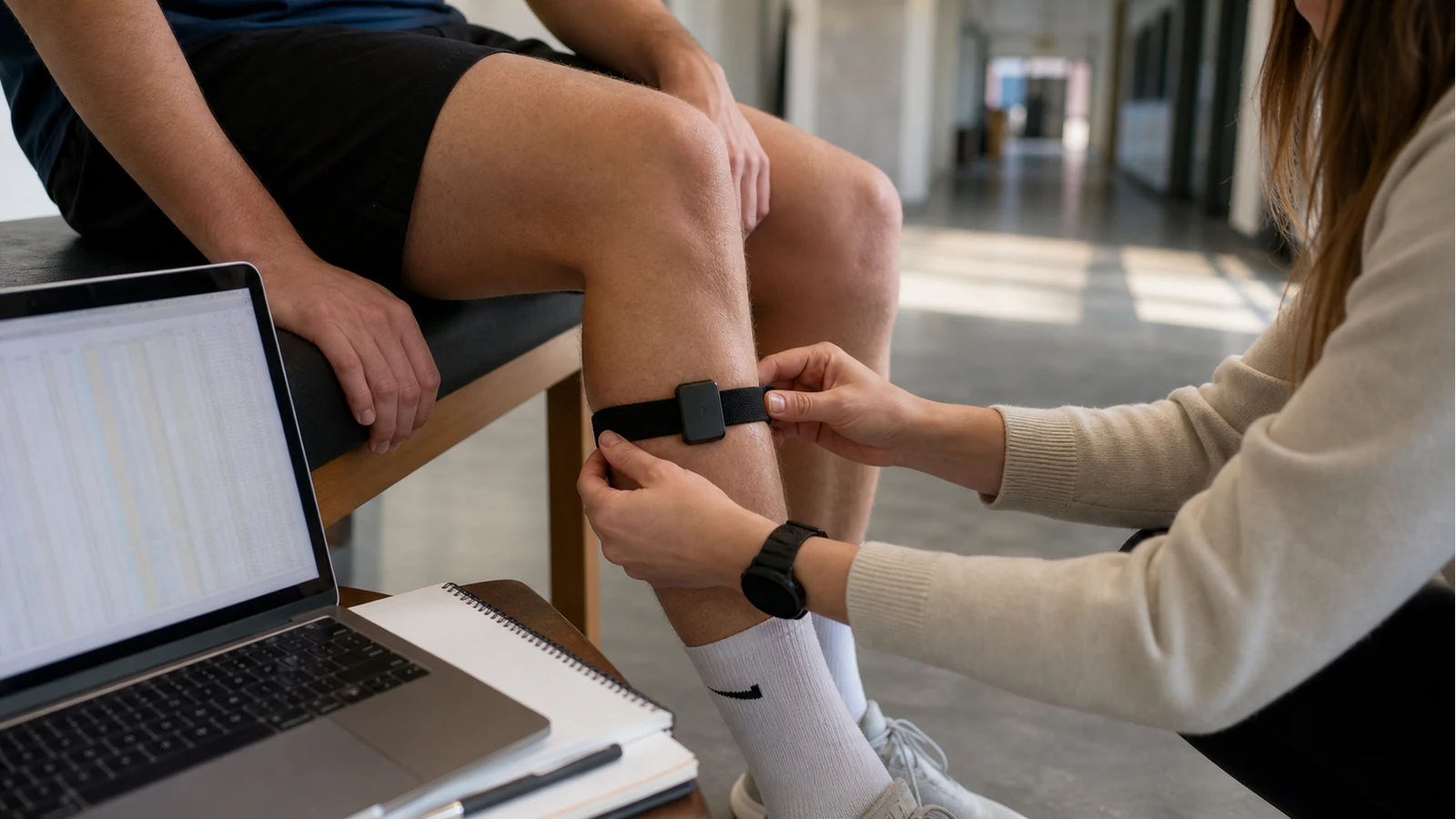
Small studies often fail before statistics: straps slip, CSV files do not line up, participants miss appointments, or the lab is booked. A lower-cost IMU lets a researcher test protocol, attachment sites and data handling before committing to a higher-cost system. That is a legitimate pilot-study use case.
The broader research direction is also real. The OpenSenseRT wearable kinematics paper is one example of work around lower-cost wearable kinematics pipelines. It should be read as support for careful method design, not as proof that any cheap sensor equals a commercial suit.
What commercial systems still do better
Commercial motion-capture ecosystems usually win on synchronisation, calibration certificates, software maturity, multi-node workflows, support and validation history. For example, x-IMU3 specifications and pricing show a UK device with calibrated sensors, 400 Hz AHRS output, stand-alone logging and wireless synchronisation features. Those extras explain why research-grade systems cost more.
Methods-section checklist
| Item to document | Why it matters |
|---|---|
| Sampling rate used | Reviewers need to know whether gait or movement events were captured at adequate temporal resolution. |
| Output type | Euler angles, quaternions and raw acceleration answer different questions. |
| Attachment site and strap method | Movement artefact can dominate sensor accuracy. |
| Synchronisation method | Multi-node studies need a timestamp story before recruitment starts. |
| Export workflow | CSV into MATLAB, Python or R must be repeatable. |
Who should not downshift
Do not downshift if the study requires clinical-grade claims, direct comparison with an optical gold standard, tight multi-sensor synchronisation, or defensible absolute orientation under heavy magnetic disturbance. In those cases, budget for a validated system or collaborate with a motion lab.
If the job is a small feasibility build where budget and immediate UK availability matter, checking a same-site wearable-capable unit such as WT901BLE5.0 is reasonable only after you have written the validation limits into your protocol.
FAQ
Can I cite the device spec in a paper?
You can cite manufacturer specifications, but the method should also describe your own calibration, placement and filtering choices.
Will one sensor prove concurrent validity?
No. Validity needs a planned comparison, not just a product specification.